 place
West Midlands county
The metropolitan West Midlands brings together seven boroughs whose histories include Birmingham workshops, Black Country glass, Walsall leather, Coventry’s rebuilding and Solihull’s changing rural economy.
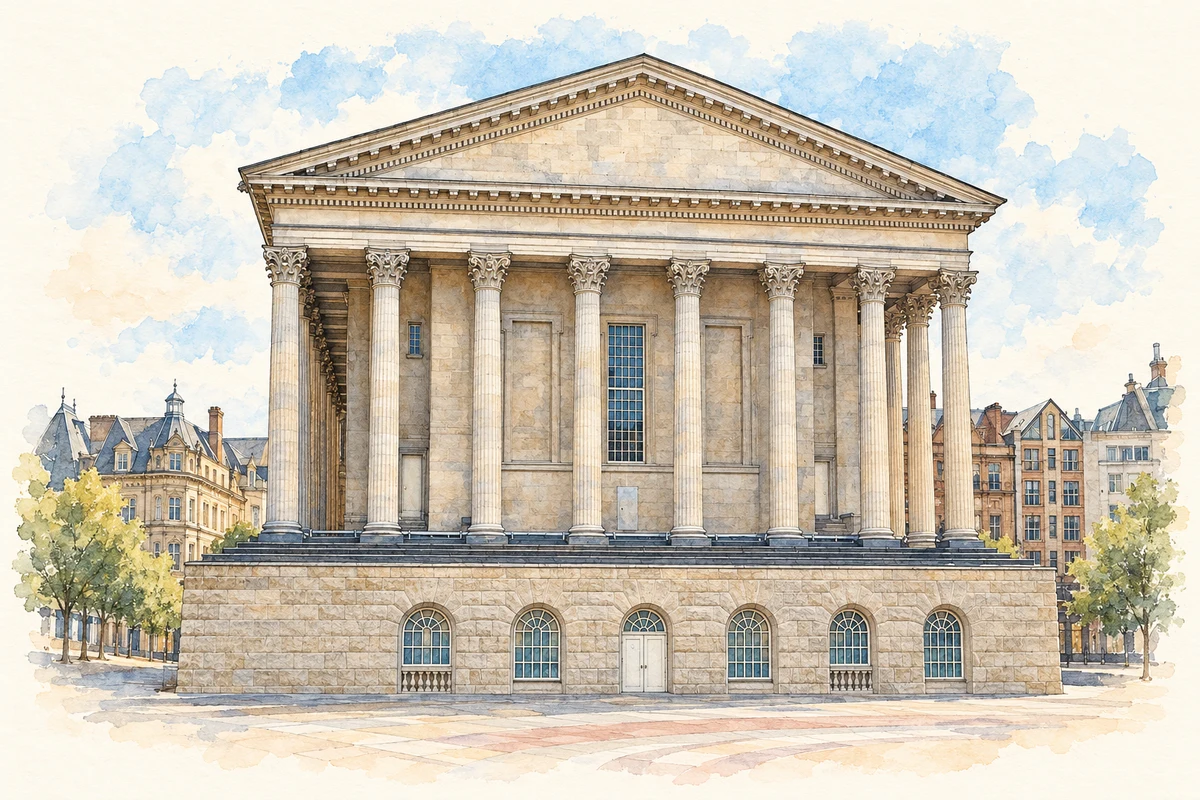
Illustration credit
Illustration of Birmingham Town Hall, adapted from Birmingham Town Hall after refurbishment.jpg by Erebus555. CC BY-SA 3.0. AI-assisted watercolour and fine ink adaptation; cream paper margins, simplified fine detail and removal of incidental street clutter.

A history of West Midlands
Seven boroughs within a larger region
Here West Midlands means the metropolitan county formed in the 1974 reorganisation: Birmingham, Coventry, Dudley, Sandwell, Solihull, Walsall and Wolverhampton. The contemporary parliamentary list records those seven districts under the new county name. This is a smaller area than the wider West Midlands region used elsewhere in geography and public administration. Places in neighbouring Warwickshire, Worcestershire or Staffordshire can share close economic and cultural connections without belonging to this county group. [9] [2]
The West Midlands Combined Authority is another distinct institution. Established in 2016 by the seven metropolitan councils, it enables joint decisions and collaboration across council boundaries. Its published explanation also includes non-constituent councils outside those seven boroughs. Those wider partnerships should not be read as an enlargement of the metropolitan county. The boroughs provide a clear geographical frame for exploring local histories that long predate either modern organisation. [2]
Birmingham: invention and the workshop
Soho House was Matthew Boulton’s home from 1766 to 1809. The house became a meeting place for the Lunar Society, whose participants included James Watt, Joseph Priestley, Erasmus Darwin and Josiah Wedgwood. Their meetings brought experiments and philosophical discussion into a domestic setting. Objects associated with the nearby Soho Manufactory include buttons and buckles as well as silver, clocks and vases: industrial Birmingham involved many products and forms of skilled work. [3]
The Museum of the Jewellery Quarter preserves a more intimate scale of manufacture. When the proprietors of Smith & Pepper retired in 1981, they closed their workshop with much of its contents still in place. Its survival allows working life to be explored through tools, workspaces and a specific firm. Together Soho House and this workshop suggest two useful scales for reading Birmingham’s history: networks of innovation and the repeated practical work of making individual objects. [4] [3]
Glass and leather: connected specialist trades
In the Stourbridge area, coal and fireclay attracted glassmakers seeking resources for their furnaces. Later glassmaking included highly decorated tableware and scientific products as well as more utilitarian goods. Dudley Council’s history records pressed glass at Wordsley in 1832 and the stimulus given by the abolition of glass excise in 1845. Thomas Webb & Sons drew skilled workers from Britain and Europe, including French painters and Bohemian engravers. The Glass Quarter connects local materials with travelling skills and wider markets. [6]
Walsall’s leather trades grew alongside an older specialism in metal fittings for horses, including bits, stirrups and buckles. Bridle makers could obtain these from local loriners. Expansion accelerated after 1840 and benefited from the railway’s arrival in 1847, but prosperity did not mean easy working lives. The Leather Museum describes long hours, low wages and particularly poor conditions for women. As engines displaced working horses, firms increasingly made lighter leather goods such as bags and wallets. [8]
Coventry: destruction and rebuilding
Coventry’s cathedral landscape records a major twentieth-century rupture. St Michael’s medieval parish church became a cathedral in 1918, then was devastated in the air raid of 14 November 1940. The decision to rebuild was taken immediately afterwards. The cathedral’s own history places reconciliation at the centre of that decision, connecting physical reconstruction with a wider response to war. The preserved ruins are consequently part of the story of rebuilding rather than simply an abandoned predecessor. [7]
A design competition in 1951 selected Basil Spence for the new cathedral, which was consecrated in 1962. Looking at the ruins alongside the modern building introduces another West Midlands theme: the ways towns and cities remade themselves after destruction. Coventry offers a different experience from a surviving workshop or glassmaking site, while remaining equally concerned with how communities preserve, interpret and change their built environment. [7]
Solihull: market, suburb and factory
Solihull’s history complicates any picture of an entirely industrial county. The town developed around St Alphege’s church, founded about 1220, and had a weekly market by 1242. It served scattered settlements in a wooded district. Farming, blacksmithing and the making of agricultural implements and hunting weapons supported its economy. The town and nearby Knowle formed separate local centres, a reminder that present borough boundaries enclose places with their own earlier patterns of settlement. [5]
In the late nineteenth century Solihull increasingly housed Birmingham industrialists and artisans. Villas and larger houses changed its rural appearance; twentieth-century estates and industry followed. Rover occupied a Lode Lane factory at the beginning of the Second World War. Starting with Solihull, Coventry, Birmingham, Walsall or Stourbridge therefore reveals different relationships between settlement and work. This metropolitan county brings those contrasting histories together without making them a single uniform story. [5] [7] [3] [8] [6]
Places and their stories
A few of the 45 researched histories in this county.
- City
Birmingham
Illustration credit
Illustration of Birmingham Town Hall, adapted from Birmingham Town Hall after refurbishment.jpg by Erebus555. CC BY-SA 3.0. AI-assisted watercolour and fine ink adaptation; cream paper margins, simplified fine detail and removal of incidental street clutter.
 City
Coventry
Illustration credit
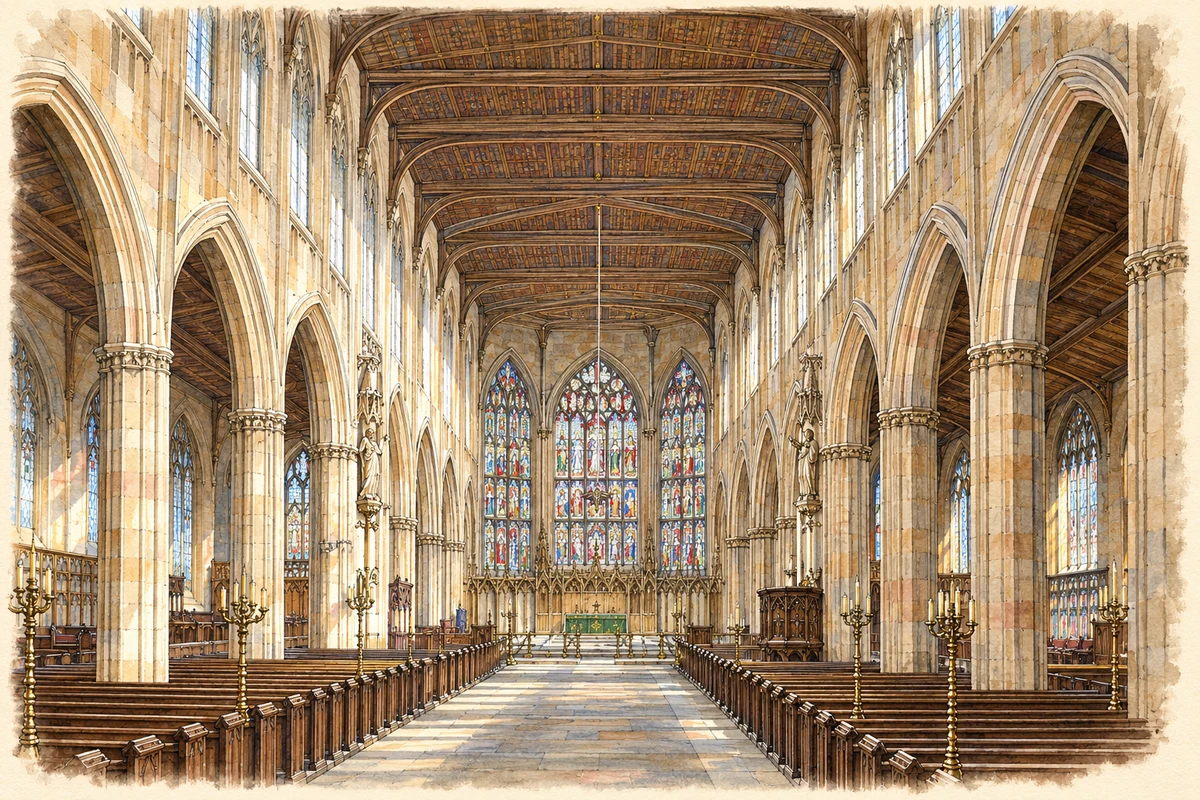
Illustration of St Michael’s, Coventry, before its destruction, adapted from Coventry-cathedral-interior.jpg by Anonymous engraver; published by Cassell & Co.. Public domain. AI-assisted historical reconstruction; intact fabric restored, colour and lighting added, missing finishes and furnishings interpreted.
Artistic reconstruction · Late nineteenth century. Artistic recreation based on current evidence, following an engraving published in 1891. St Michael’s was then a parish church and later became Coventry’s cathedral. The engraving was published in 1891, but its precise depicted date is uncertain. Colours, glazing designs, fine ornament and minor furnishings are interpreted from monochrome evidence. St Michael’s interior, Our Own Country, volume 2 (1891); Coventry Cathedral Conservation Management Plan, historical account, printed page 22
 City
Wolverhampton
Illustration credit
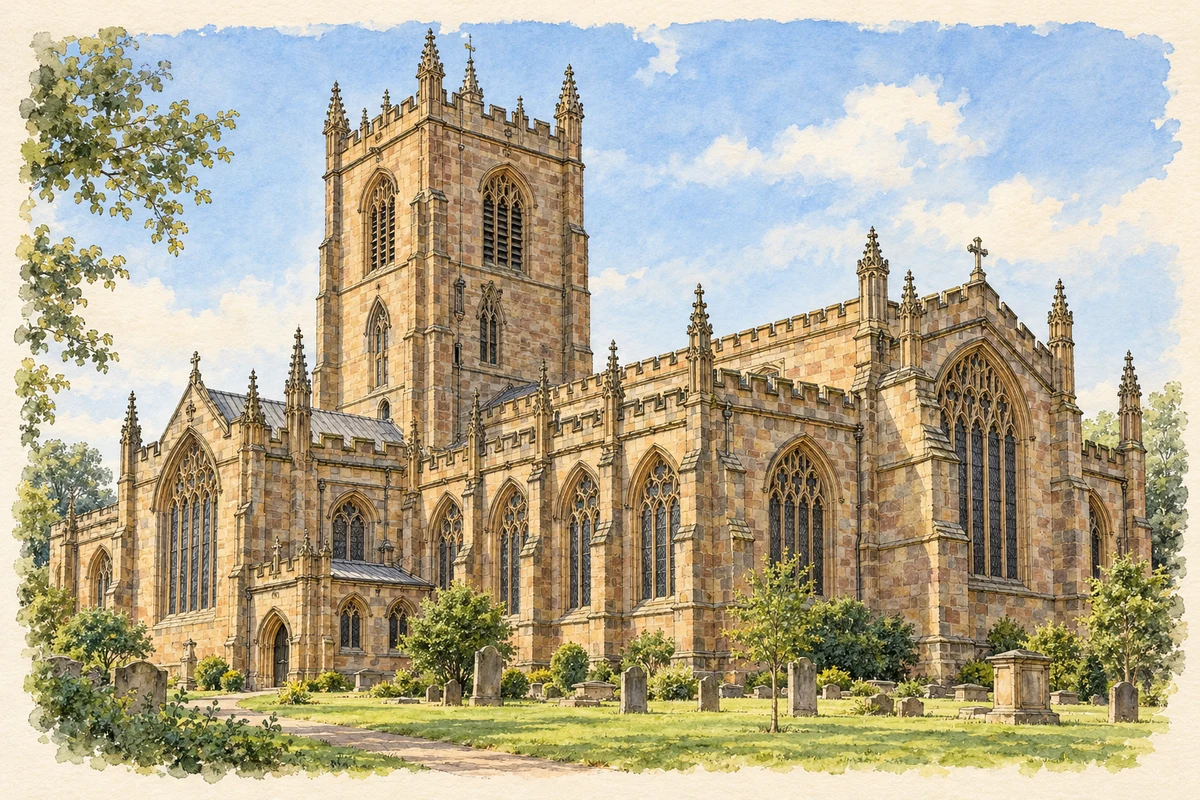
Original illustration of St Peter’s Collegiate Church, Wolverhampton by PlaceHistory. Original composition from inspected architectural facts; no source photograph copied or used as an image-edit input. Fine detail is interpretive, not a measured survey.
Original architectural composition based on the cited building descriptions; incidental setting and fine details are interpretive. Historic England: Church of St Peter; Wolverhampton parish profile
 Town
Dudley
Illustration credit
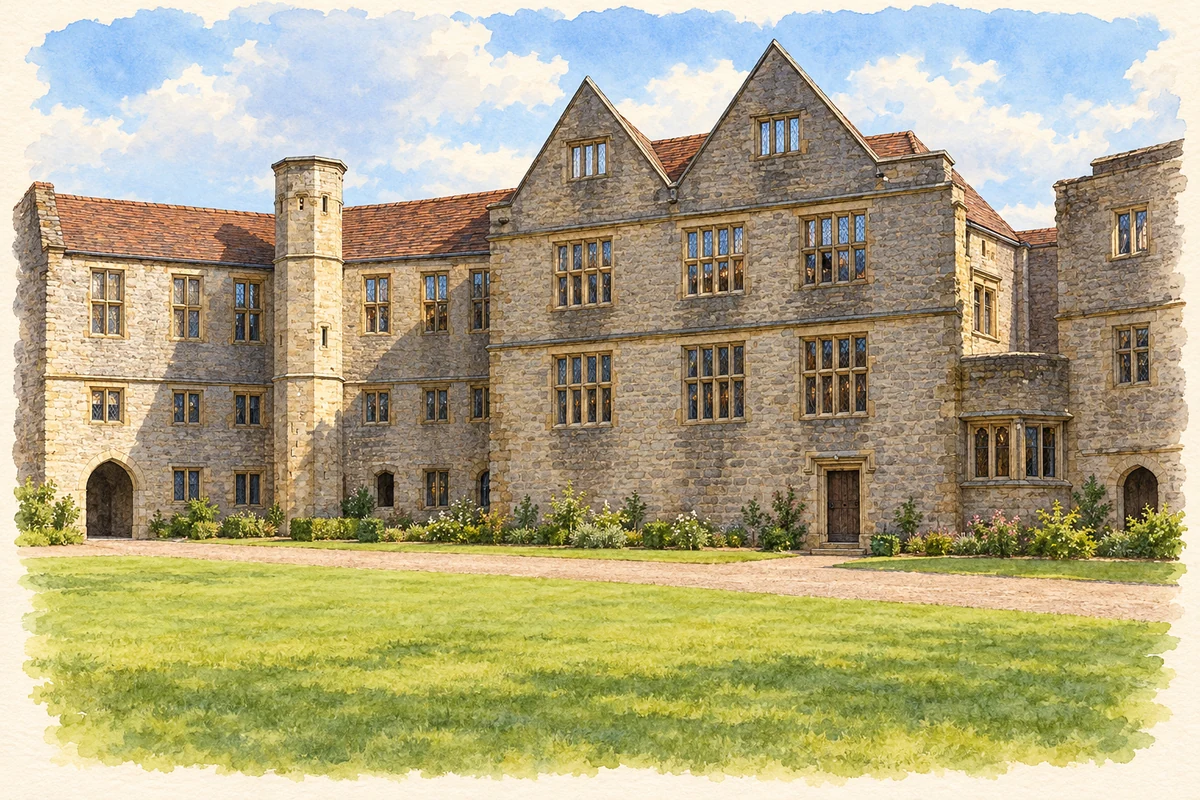
Illustration of Dudley Castle Sharrington Range, adapted from Castle Courtyard by Gordon Griffiths. CC BY-SA 2.0. AI-assisted watercolour historical reconstruction from licensed present-day photograph; missing roofs, glazing and masonry interpreted.
Artistic reconstruction · Around 1600. Interpreted central Sharrington Range before its fire; surviving masonry anchors roof and glazing restoration. The wider rebuilding campaign was unfinished; only surviving central bays are reconstructed. Roof coverings, glazing and courtyard finishes are artistic interpretations. Dudley Zoo and Castle: castle history; Friends of Dudley Castle: history and guide
 Town
Walsall
Illustration credit
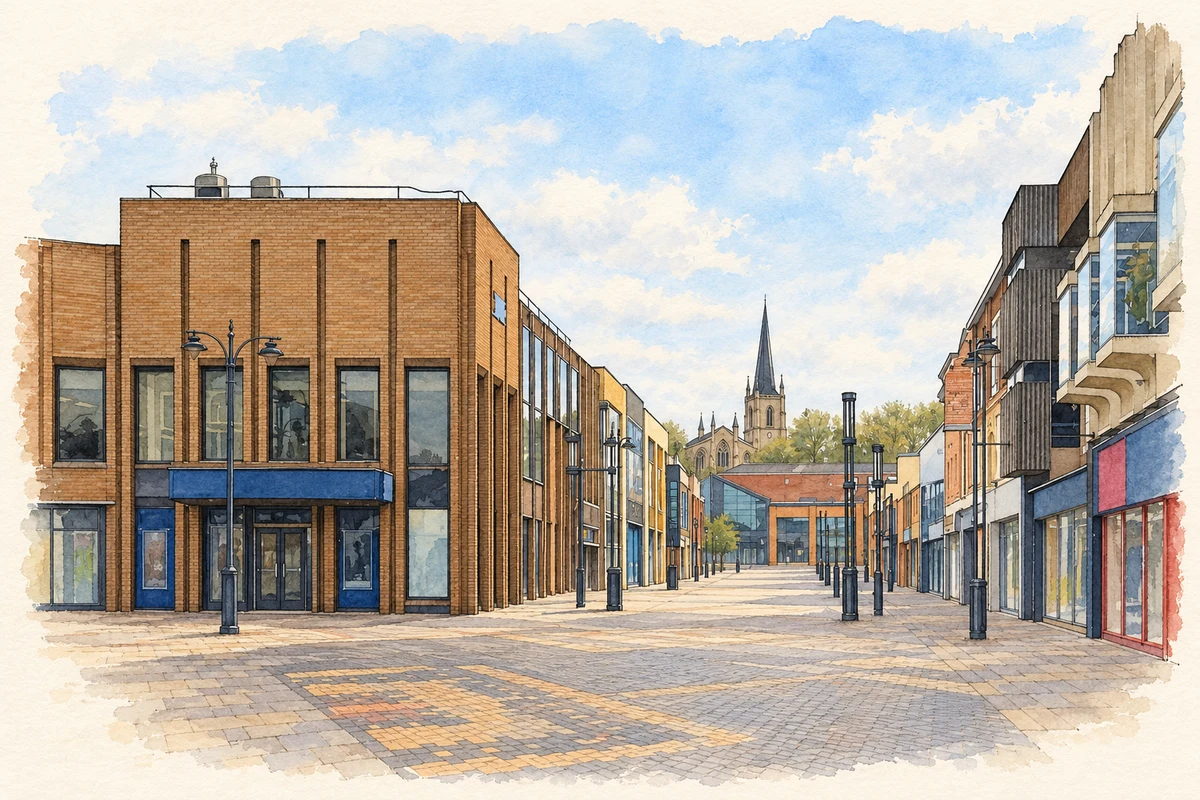
Illustration of Walsall town centre, adapted from Walsall town centre - geograph.org.uk - 6101556.jpg by Noisar. CC BY-SA 2.0. AI-assisted watercolour and fine ink adaptation; cream paper margins, simplified fine detail and removal of incidental street clutter.
 Town
Solihull
Illustration credit
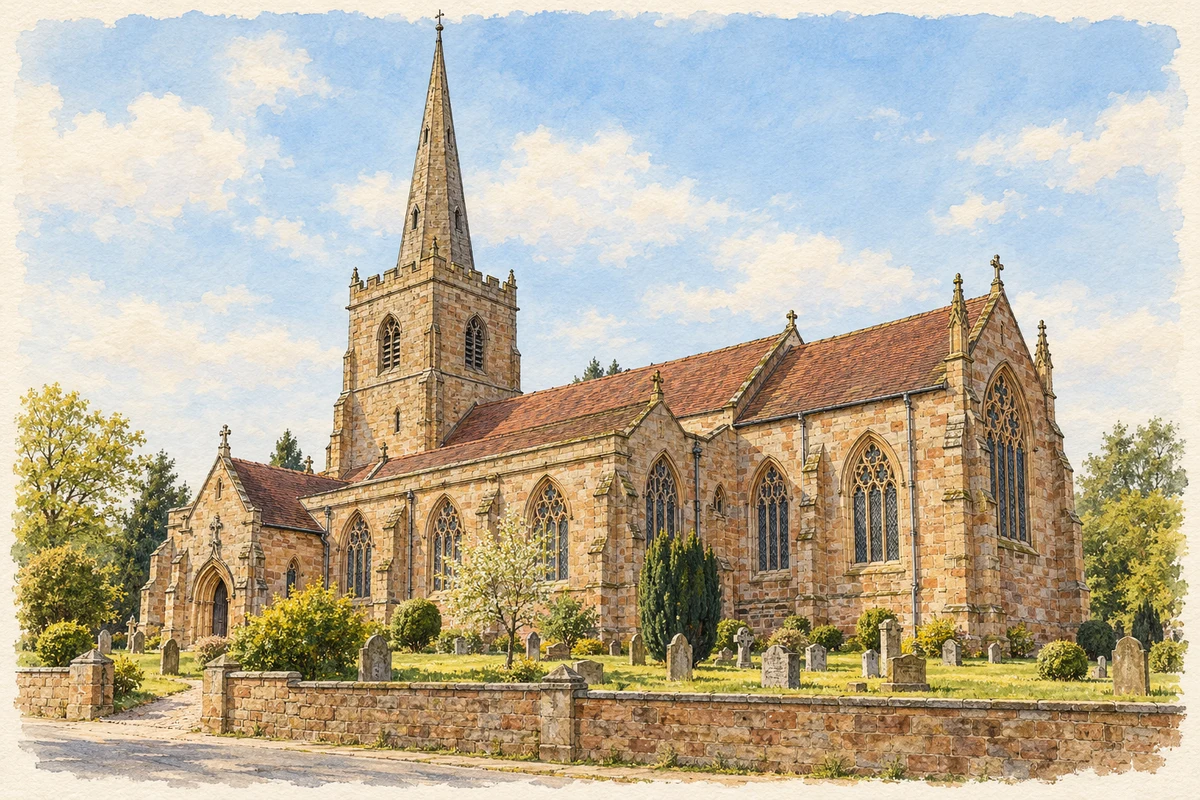
Original illustration of St Alphege’s Church, Solihull by PlaceHistory. Original composition from inspected architectural facts; no source photograph copied or used as an image-edit input. Fine detail is interpretive, not a measured survey.
Original architectural composition based on the cited building descriptions; incidental setting and fine details are interpretive. Historic England: Church of Saint Alphege; Solihull Parish: St Alphege


Explore the area
This map shows the county browsing area used by PlaceHistory. Historic county boundaries and present-day councils can differ.
Local histories in West Midlands
45 researched histories to explore.
Ordered by place name.
- Suburban area
Acocks Green
Local history - Town
Aldridge
Local history - Suburban area
Aston
Local history - Suburban area
Balsall Heath
Local history - Town
Bilston
Local history - City
Birmingham
Local history - Town
Blackheath
Local history - Town
Bloxwich
Local history - Suburban area
Bournville
Local history - Town
Brierley Hill
Local history - Town
Brownhills
Local history - Town
Coseley
Local history - City
Coventry
Local history - Other settlement
Cradley Heath
Local history - Town
Darlaston
Local history - Town
Dudley
Local history - Suburban area
Edgbaston
Local history - Suburban area
Erdington
Local history - Town
Halesowen
Local history - Suburban area
Handsworth
Local history - Suburban area
Harborne
Local history - Town
Kingswinford
Local history - Village
Knowle
Local history - Suburban area
Longbridge
Local history - Village
Meriden
Local history - Suburban area
Northfield
Local history - Town
Oldbury
Local history - Village
Pelsall
Local history - Village
Pheasey
Local history - Town
Rowley Regis
Local history - Town
Royal Sutton Coldfield
Local history - Town
Sedgley
Local history - Suburban area
Selly Oak
Local history - Suburban area
Shirley
Local history - Suburban area
Small Heath
Local history - Town
Smethwick
Local history - Town
Solihull
Local history - Town
Stourbridge
Local history - Other settlement
Streetly
Local history - Town
Tipton
Local history - Town
Walsall
Local history - Town
Wednesbury
Local history - Town
West Bromwich
Local history - Town
Willenhall
Local history - City
Wolverhampton
Local history
Sources & further reading
- What is the West Midlands Combined Authority? · West Midlands Combined Authority
- About Soho House · Birmingham Museums
- About the Museum of the Jewellery Quarter · Birmingham Museums
- Solihull town history · Solihull Metropolitan Borough Council
- Stourbridge Glass Quarter: History · Dudley Council
- Our history · Coventry Cathedral
- A history of the leather industry in Walsall · Walsall Leather Museum
- District Councils and Boroughs, 28 March 1974 · UK Parliament, Hansard
- ONS December 2025 administrative boundaries
Last researched 2026-10-27. How we research our histories.